ChatGPT出来的那一年,我在百度做AI地图
2023年,ChatGPT刚出来,我在百度和几十位伙伴闭关四个多月,上线了地图的AI向导。回头看,挑战都落在地图最看重的三件事上:快、准,和用户心智。
012023年:一张milestone照片
翻到自己在2023年做的第一个AI产品的milestone照片。那是我在百度工作期间做的最后一个产品,也是我参与打造并上线的第一个AI产品。
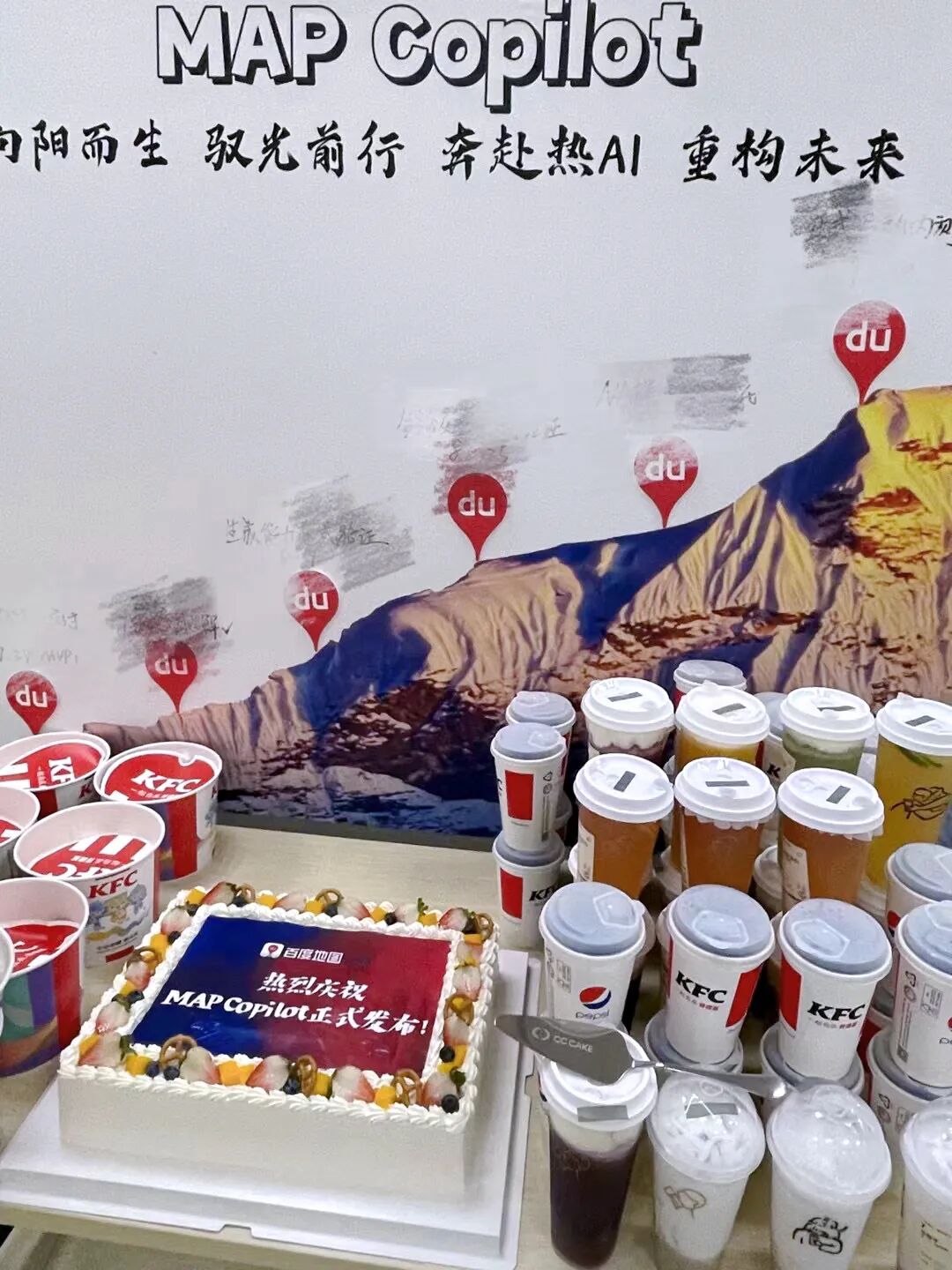
那时ChatGPT刚横空出世不久,各大厂也是拿出了自己的家底放手一搏。2023年6月,我有幸加入到百度第一批AI产品的建设中,和几十位伙伴闭关了4个多月,上线了第一个千万DAU产品的AI重构。
它内部叫Map Copilot,后来对外发布时的名字是“AI向导”。核心的场景是围绕人在使用地图找点决策、导航的过程当中那些泛化长尾的需求。在AI出来之前,地图就已经有相对成熟的搜索和语音体系,当用户说出一个明确需求时,可以通过标签matching、地点打分等一系列算法去满足。但当用户说出的需求是复杂的、长尾的时候,满足率是很低的。
举个简单的例子,如果用户说“导航到西湖”,地图很擅长这个事情。但如果用户说“导航到杭州有名的、适合亲子游玩的景点”,这种query是很难被真正理解的,地点本身也没有被打上这些丰富的内容标签让算法去找到它。
而这样的长尾需求,在地图承接的语音需求里占到了相当高的比例。
这个结论是我们全组的产品在抽样了一批语音query和session之后,人工一条一条判断、审核、分类得出的。当时作为一个应届毕业后从事了两年产品工作的我来说,从这样古法但直接的方式得出结论,加上自己平时的生活中也体会到这种长尾的需求,AI的出现让我对做这个产品感到非常兴奋。
02我们要做全球首个AI原生地图
通过上面的需求分析,地图的长尾需求主要分为几个大场景:泛化找地点、地点详情询问和复杂的导航路线规划需求。当时我主要负责泛化找点和地点问询场景的满足。
泛化找地点query样例:帮我找北京适合亲子游玩、有历史的景点 / 帮我找从故宫去天坛顺路的餐厅
地点详情问询query样例:故宫几点开门?儿童需要买门票吗?
那么AI在这两个场景下最核心的作用就是:1. 意图理解;2. 地点的内容检索标签生成;3. 问询场景下的内容生成。有了这三样的补足,加上地图原本就有的检索、地点数据、导航数据和内部数据调用能力,这两个场景就可以得到满足。
在产品设计开发的四个月里,我们遇到了很多AI带来的希望,但也带来了更多的变数和挑战。回头看,这些挑战正好落在地图这个产品最看重的三样东西上:快、准,和用户心智。
03四个月,三个挑战
挑战一|快:AI听得懂了,但用户等不起
地图本身就是一个效率工具。在AI出来之前,用户对所有软件的响应速度都已经习惯了,多等几秒都可以抱怨产品太慢、难用。那时我还深刻地记得我用ChatGPT,平均一个问题需要等待5-10秒甚至更久才能得到答案。
也就是说,就算我们用原本的算法规则很快把大部分简单需求分流掉,剩下的复杂需求再通过AI去理解、再到生成答案,这个等待时间远超用户对地图的习惯预期,即便经过不断优化,也依然需要好几秒。这个等待时长用户是不习惯的,那么就需要做很好的产品教育和引导,让用户知道在这种场景你首先可以来地图得到满足。当好结果的稀缺性和满足度达到了用户的预期时,这个产品才有足够的leverage。
但是当一个产品满足了一个新场景——这个场景用户原本是没有预期可以被满足的——产品本身的教育是难且缓慢的,需要整个市场的教育推动。比如当我的长辈都知道AI了,在他们使用的大部分产品里都体验到了AI的魔力,这个时候用户的信任才会逐渐打开。
挑战二|准:幻觉是不可容忍的
地图给人的定位除了刚刚说的快,“准”是用户关心的top 1。地图的准几乎可以快速影响一个地图产品在用户心中的口碑。如果用户问一个问题,AI在拿到地图的数据做回答时产生了幻觉,回答了现实世界里完全不存在的答案,那么这是完全不可容忍的。
所以那时我们在Prompt Engineering、RAG和Fine-tuning上做了很多功课,目的就是让AI给出准确、言简意赅的回答。当然过程中也出现了这些手段带来的其他问题,比如fine-tune导致了过拟合:用户换一些提问方式,或者问同类型的新问题,模型回答得就不好了。这时我们就需要重新审视我们的测试集和一个月前相比是否还成立、是否需要更新。测试集的打分标准也是在一次一次地摸索。没有人有标准答案,都是摸着石头过河。
挑战三|心智:为什么来地图搜,而不是小红书
比较幸运的是,地图在AI出来之前就已经有了语音交互和语音包,喊“小度小度”就能唤起语音对话模式,也就是说在交互形态上天然就是自然语言交互。再加上那时语音包一直是用户很喜欢的一个功能,大家会自制语音包,也会用一些明星的语音包,这说明这类虚拟角色的交互也是用户习惯和喜欢的方式。这大大减少了产品使用的friction。
产品开发到一半的时候,AI图像生成又掀起了一波浪潮,数字人、AI头像等产品像雨后春笋一样冒出来。妙鸭相机就是那时非常成功的一个AI C端产品,让很多用户都开始玩起了AI头像/写真生成。于是我们也在语音包的基础上,推出了从原本的小度机器人到生成一个自定义头像的功能,成了产品的小趣味。
难的是地图在泛化场景下的用户心智培养。地图很擅长找点、图上交互、路线ETA数据和找点决策后的快速导航,但缺的是地点维度的泛化内容。做这个产品的时候,组里经常讨论的是:这类问题大家为什么不去小红书上搜,而是来地图搜?虽然那时我们也时常看到用户吐槽小红书的内容很丰富,但每次都要翻看很多篇笔记、找很久,决策路径太长,“如果有地图模式就好了”。但小红书已经培养了用户在这类场景下的心智,也确实拥有最多的UGC内容。所以那时我们也和各大平台做了UGC和PGC的内容整合。没有原生的内容环境,也基本说明了地图在这类场景下需要更突出权威性和实时性的特点。
04上线:2023年10月17日
最终,2023年10月17日,产品在百度世界大会正式上线公测。与此同时,各大厂各产品的AI相继出世。还记得那段时间每天又激动又紧张的心情:不停地分析用户的query和答案,更新测试集,更新新模型,测试,再A/B test。
虽然用户评论褒贬不一,但也让我真实地接收到了在AI刚开启的时代,用户第一波的反馈,和AI掀起的波浪的力量。
05从一张A4纸,到把一切扔给大模型
其实说实话,很怀念几年前还没有AI的时候做产品的状态。那时每一个产品决策背后都是扎实的研究、分析、得出结论。很多不懂的技术术语,我会通过网上查阅资料、视频、问身边的人来学习,虽然获得知识的途径更费时费力,但这个过程是一步一步地加深理解。那个时候写产品文档更像是对自己的研究成果和思路的一种结构化梳理,再通过需求评审的方式和他人交流探讨,也是让自己的知识变得concrete。最后把整个产品做出来的时候,就像是自己学到的知识进行了实践,并且通过用户的反馈和A/B测试等方式进行验证。
我记得在这个AI项目刚开始的时候,老板给我的第一个任务是给研发总结出用户query的范式。我的理解是:如何用一种结构化的方式,把像一团散沙的用户query和session(行为路径)总结成一种或几种pattern,目标是让研发团队清晰地理解到我们核心优化哪些场景、每个场景下用户的问法和主要信息构成。对于产品团队来说,这也是我们去组织规划一个合理评测集的重要proof。
我记得当时我对着几千条用户query脑袋像一团乱麻,一整天尝试总结了好几种分类方式都觉得不够具有代表性。距离ddl还有3个小时的时候我还是没有找到最好的答案。然后我跑到公司楼下的花园一个人待着,从打印机拿了一张A4纸和一支笔,把自己脑海里乱蹦的想法都写下来,不断去找它们之间的关联,有点像大学解题的感觉。在最后一个小时的时候我突然发现,是我之前想得过于复杂了,带入了太多脑海里已有的业务逻辑。
从第一性原理的角度去推导,人去问一个问题,就存在几种询问方式:【who】【what】【when】【where】【why】【how】。那在地图场景里,who基本不存在,what/why就是问一个地点的详情,when就是问时间、比如什么时候到(ETA),where就是找地点,how就是问怎么去。这就直接对应到了文章最早说的我们定义出的三个核心优化场景:where对应1. 泛化找地点;what/why对应2. 地点详情询问;when/how对应3. 复杂的出行需求(包括导航、ETA、交通方式等等)。
但是知道询问方式还不够,我们还需要知道每一种问询方式里的核心组成部分——也就是用户的问题里带了哪些信息。从第一性原理推导,就是【时间】【地点】【人物】,在此基础之上会增加对每个元素的形容词【什么样的】。在地图场景里【人物】是不重要的,那么就剩下了【时间】【地点】和形容词【什么样的】。
拿一条真实的query拆一下就清楚了:“帮我找北京周末适合亲子游玩、有历史的景点”——它的询问方式是where(找地点),组成部分是【时间:周末】【地点:北京】【什么样的:适合亲子、有历史】。
结合刚刚定义出的三个核心场景,询问方式和组成部分的排列组合,就是最终我们可以归纳出的用户query框架。当时这套框架让我在设计评测集的时候非常有思路,也成为了后续用户query蜂拥而至时不会乱了阵脚的分析框架。
这套框架怎么从一张A4纸长成评测集的骨架,我后来单独写成了一篇:一张A4纸,拆解任何一堆用户query。
现在我的工作流已经完全改变了。我不需要再从各个渠道收集知识,就可以看到一个总结好的回答。遇到复杂的一团散沙的信息,只要全部扔给大模型,就会组织成各种你想要的状态,并且找到规律。现在甚至不需要需求文档了,我可以直接把分析的结果变成一个视觉demo,甚至有些不强依赖后端的功能可以直接开发上线。反而有的时候我着急于快速iterate产品,在产品上线后再去一个个学习某个不在我知识库里的知识,心里反而没那么笃定踏实了。不过我想,这也是AI时代带给我的一个新的课题。
06题外话:那时的生活
那段时间我们封闭开发,所有参与的同学都被拉到了一个单独的办公楼,大家都是压力与兴奋共存的状态。我和当时同项目的同事、老板也是在那个时候建立了深厚的友谊,我们每天中午一起去办公室外面觅食,借着回工位的这段距离走走路消消食,那基本上是一天里唯一的运动时间。那段时光现在回想挺有意思的。如果回到过去可以改变的,是那时办公桌一坐就是一天,后来落下了腰间盘突出、麦粒肿的毛病。后来发现自己精力大不如从前,很难再每天高强度工作超过10个小时了,这让我真正意识到身体才是革命的本钱,精力是一个人的核心资产。所以在之后的工作中,我会有意识地去注意自己的精力状况进行调整。
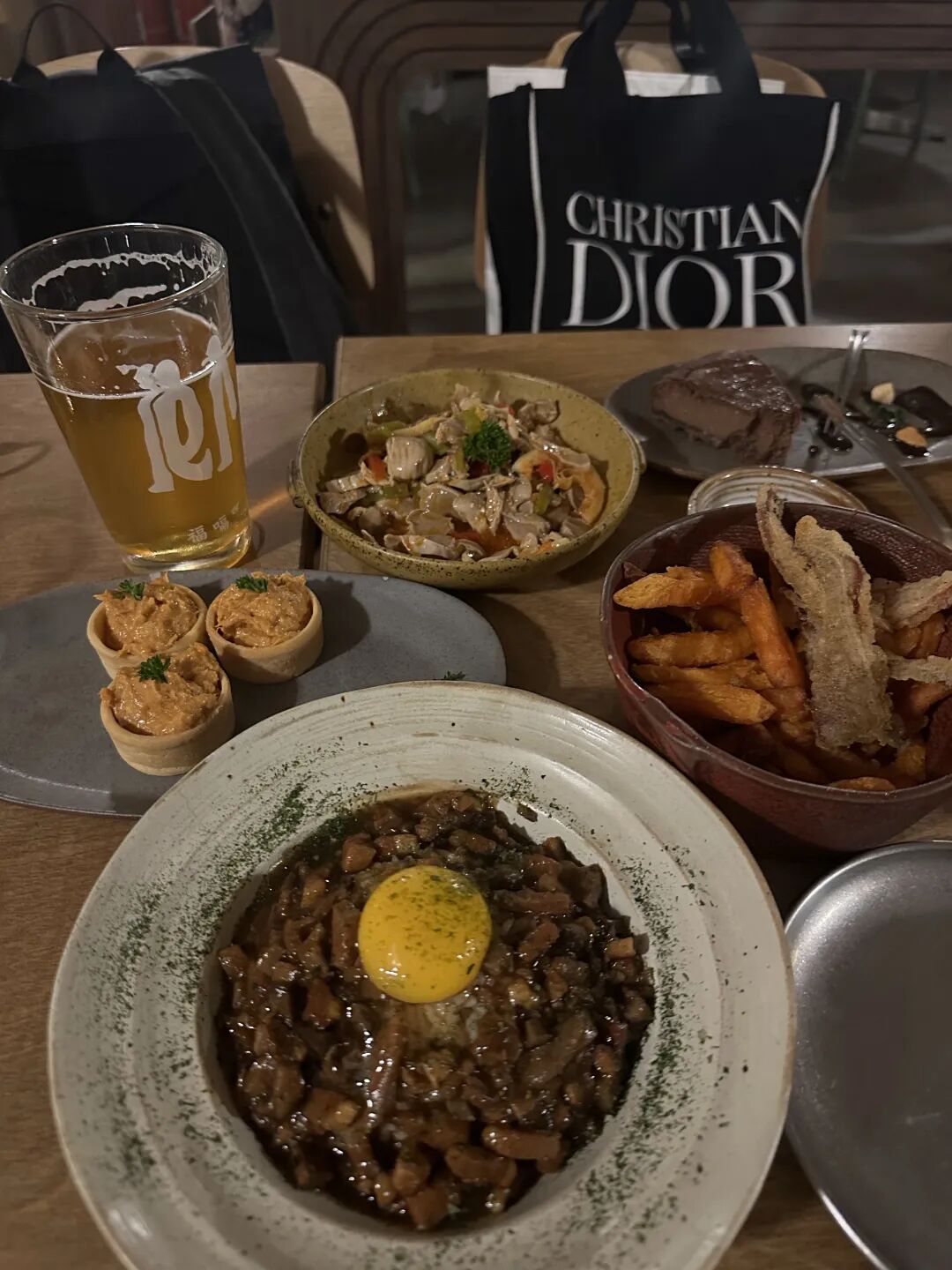
那时我和老陆还是异地,我在北京他在上海,我周末要加班,所以都是他周五下班后坐高铁来北京。有一次我们纪念日,他租好了车、定好了餐厅,结果我们一个项目会因为一次模型的更新导致效果突然变差,原本1个小时的会开了4个小时。他就在我办公楼外面的快餐店等着,一直等到晚上快10点、那家餐厅都关门了我才结束会议。他把我带上车,说他找好了另一家餐厅,带我去吃夜宵。吃夜宵的时候我向老陆说起今天遇到的困难,向他请教了过拟合的问题。我记得老陆从大模型的前身讲到原理,再解释为什么这样的原理会产生过拟合。不得不说老陆非常擅长把复杂的知识讲明白,也谢谢他在那段大脑的知识还来不及更新、动作就要跟上的日子里,给了我专业上和陪伴上的支持。
尾声三年后
今年是2026年,距离AI旅程的前半段已经过去了3年。这3年里我经历了从C端到SMB到Enterprise的AI产品旅程。在每天深度的体验中,感到很幸福可以有生之年看到技术如此高速的发展,也意识到在时代的洪流里自己很渺小,要守住本心,保持冷静。
本文内容均为个人回忆与观点,不代表任何公司立场
AI时代经历与感悟 · 系列(一)
The Year ChatGPT Arrived, I Was Building an AI Map at Baidu
After more than four months of building, what stayed with me were the tradeoffs: How long would people wait? How accurate did an answer need to be? And why would someone turn to a map to ask these questions?
012023: A Milestone Photo
I came across the milestone photo of the first AI product I built in 2023. It was the last product I worked on at Baidu, and the first AI product I helped build and ship.
ChatGPT had just burst onto the scene, and every major tech company was betting the house on AI. In June 2023, I was fortunate to join Baidu's first wave of AI product building. Together with dozens of teammates, we went heads-down for over four months and shipped the AI rebuild of a product with tens of millions of daily active users.
Internally it was called Map Copilot; when it launched publicly, its name was "AI Guide." The core scenarios revolved around the broad, long-tail needs people have while using a map — deciding where to go and navigating there. Before AI, maps already had fairly mature search and voice systems: when a user expressed a clear intent, algorithms like tag matching and place scoring could satisfy it. But when the need was complex and long-tail, the satisfaction rate was very low.
A simple example: if a user says "navigate to West Lake," a map handles that beautifully. But if they say "navigate to a famous, family-friendly attraction in Hangzhou," that kind of query is hard to truly understand — and places weren't tagged with rich content labels that would let an algorithm find them.
Yet these long-tail requests made up a remarkably high share of the voice queries the map received.
We reached this conclusion the old-fashioned way: every PM on the team sampled batches of voice queries and sessions, then judged, reviewed, and categorized them one by one. As someone two years out of school and two years into product work, drawing conclusions through such a rustic-but-direct method — and feeling those same long-tail needs in my own daily life — made me genuinely excited about what AI could do for this product.
02We Set Out to Build the World's First AI-Native Map
From that needs analysis, the map's long-tail demands fell into a few major scenarios: open-ended place discovery, questions about place details, and complex routing needs. I was mainly responsible for the first two.
Open-ended discovery queries: "Find me family-friendly, historical attractions in Beijing" / "Find me a restaurant on the way from the Forbidden City to the Temple of Heaven"
Place-detail queries: "What time does the Forbidden City open? Do children need tickets?"
AI's most essential contributions in these scenarios were: 1. intent understanding; 2. generating content-retrieval tags for places; 3. generating answers for detail questions. With those three pieces in place — on top of the map's existing search, place data, navigation data, and internal data-calling capabilities — both scenarios could be served.
Across four months of design and development, AI brought us plenty of hope — and even more uncertainty and challenges. Looking back, those challenges landed squarely on the three things a map product values most: speed, accuracy, and user mindshare.
03Four Months, Three Challenges
Challenge 1 | Speed: AI could understand, but users couldn't wait
A map is, at heart, an efficiency tool. Before AI, users were accustomed to instant responses from all their software — a few extra seconds was enough to make them complain a product was slow and clunky. I vividly remember using ChatGPT back then and waiting 5–10 seconds or more, on average, for each answer.
Even if we routed most simple requests through the existing rule-based pipeline quickly, the remaining complex requests still had to go through AI understanding and answer generation — a wait far beyond what users expected from a map, still several seconds even after constant optimization. Users weren't used to waiting that long, so we needed strong product education and guidance to teach them that for these scenarios, the map should be their first stop. Only when the scarcity and quality of good results met users' expectations would the product have real leverage.
But when a product serves a brand-new scenario — one users never expected could be served at all — education is hard and slow, and it takes the whole market pushing together. Only when my parents' generation knows what AI is, and has felt its magic in most of the products they use, does user trust gradually open up.
Challenge 2 | Accuracy: hallucination is unforgivable
Beyond speed, accuracy is the number-one thing users care about in a map — it can make or break a map product's reputation almost overnight. If a user asks a question and the AI hallucinates while answering from map data, producing something that simply doesn't exist in the real world, that is completely unacceptable.
So we did a lot of homework on prompt engineering, RAG, and fine-tuning, all aimed at making the AI answer accurately and concisely. Of course, these techniques brought their own problems — fine-tuning caused overfitting, for instance: when users rephrased a question or asked a new question of the same type, the model's answers degraded. Then we'd have to re-examine whether our test set from a month ago still held up and needed updating. The scoring criteria for the test set were also worked out through trial after trial. Nobody had the answer key; we were all crossing the river by feeling for the stones.
Challenge 3 | Mindshare: why search the map instead of Xiaohongshu?
Luckily, the map already had voice interaction and voice packs before AI came along — saying "Xiaodu, Xiaodu" would wake the voice conversation mode, so natural-language interaction was already the native form. Voice packs had long been a beloved feature: people made their own and used celebrity voice packs, which showed that interacting with virtual characters was something users knew and enjoyed. That greatly reduced the friction of using the product.
Midway through development, AI image generation set off another wave — digital humans and AI avatars sprouted up everywhere. Miaoya Camera was a hugely successful consumer AI product of that moment, getting masses of users hooked on AI avatar and portrait generation. So on top of the voice packs, we added the ability to go from the default Xiaodu robot to a custom-generated avatar — a small delight in the product.
The hard part was building user mindshare for the map in these open-ended scenarios. Maps excel at finding places, on-map interaction, route ETA data, and fast navigation once you've decided — but they lack broad, content-rich information at the place level. Throughout the project, the team kept debating: for these questions, why would people come to the map instead of searching Xiaohongshu? We often saw users complain that while Xiaohongshu's content was rich, they had to flip through post after post and search forever — the decision path was too long, and "a map mode would be so nice." But Xiaohongshu had already claimed users' minds for these scenarios, and it truly had the most UGC. So we also integrated UGC and PGC content with major platforms. Not having a native content ecosystem essentially meant that in these scenarios, the map had to lead with authority and real-time reliability instead.
04Launch: October 17, 2023
Finally, on October 17, 2023, the product went into public beta at Baidu World. At the same moment, AI features from every major company and product were arriving one after another. I still remember the daily mix of excitement and nerves: endlessly analyzing user queries and answers, updating test sets, rolling in new models, testing, then A/B testing again.
User reviews were mixed, but they gave me something real: the very first wave of user feedback at the dawn of the AI era, and a feel for the sheer force of the wave AI had set in motion.
05From a Sheet of A4 Paper to Throwing Everything at an LLM
Honestly, I miss the way we built products a few years ago, before AI. Back then, every product decision rested on solid research, analysis, and conclusions. For technical terms I didn't understand, I'd learn by digging through articles and videos online and asking people around me. Acquiring knowledge took more time and effort, but the process deepened understanding step by step. Writing a product doc then was more like structuring my own research and reasoning, then discussing and refining it through requirement reviews — a way of making my knowledge concrete. And when the product finally shipped, it felt like everything I'd learned had been put into practice and validated through user feedback and A/B tests.
I remember at the very start of this AI project, my manager's first task for me was to distill a paradigm of user queries for the engineers. My read on it: find a structured way to compress a loose heap of user queries and sessions (behavior paths) into one or a few patterns, so the engineering team could clearly see which scenarios we were optimizing for, and how users phrase things and what information their questions carry in each scenario. For the product team, it was also crucial proof for organizing a sound evaluation set.
I stared at thousands of user queries with my head in knots, spending a whole day trying classification scheme after classification scheme, none of them representative enough. Three hours before the deadline, I still didn't have my best answer. So I went down to the garden outside the office to be alone, grabbed a sheet of A4 from the printer and a pen, and wrote down every thought bouncing around my head, hunting for the connections between them — a bit like solving problem sets in college. In the final hour it suddenly hit me: I had been overcomplicating it, dragging in too much of the business logic already in my head.
Reasoning from first principles: when a person asks a question, there are only a few ways to ask — who, what, when, where, why, how. In the map context, "who" barely exists; "what/why" is asking about a place's details; "when" is about time, like arrival time (ETA); "where" is finding a place; "how" is how to get there. This maps directly onto the three core scenarios we'd defined at the start: "where" → 1. open-ended place discovery; "what/why" → 2. place-detail questions; "when/how" → 3. complex travel needs (navigation, ETA, transport modes, and so on).
But knowing the question types wasn't enough — we also needed the core components inside each type, i.e., what information a user's question carries. From first principles, that's time, place, and person, plus descriptive qualifiers ("what kind of") attached to each element. In the map context, "person" doesn't matter much, which leaves time, place, and the qualifier "what kind of."
Break down a real query and it becomes obvious: "Find me family-friendly, historical attractions in Beijing for the weekend" — the question type is where (finding a place), and the components are [time: weekend] [place: Beijing] [what kind of: family-friendly, historical].
Combining the three core scenarios with the permutations of question types and components gave us the final framework for user queries. That framework gave me real clarity when designing the evaluation set, and later, when user queries came flooding in, it kept the analysis from descending into chaos.
I later wrote up how this framework grew from a sheet of A4 into the backbone of our evaluation set: One Sheet of A4: How I Break Down Any Pile of User Queries.
Today my workflow has completely changed. I no longer gather knowledge from scattered sources — a synthesized answer is just there. Faced with a messy heap of information, I can throw it all at an LLM and it organizes itself into whatever shape I want, patterns included. I don't even need requirement docs anymore; I can turn analysis directly into a visual demo, and features that don't depend heavily on a backend can go straight to development and launch. And yet — sometimes, rushing to iterate quickly and only learning the unfamiliar concepts one by one after the product ships, I feel less grounded than I used to. But I suppose that, too, is a new assignment the AI era has handed me.
06Aside: Life in Those Days
During that stretch we were in closed-door development — everyone on the project was moved into a separate office building, all of us running on a blend of pressure and excitement. That's when I built deep friendships with my teammates and my manager. Every day at noon we'd forage for lunch outside the office together, using the walk back to our desks to digest — basically the only exercise of the day. Looking back, it was a funny, precious time. What I'd change if I could: sitting at my desk all day long, which later left me with a herniated disc and styes. I eventually found my energy wasn't what it used to be — I could no longer grind past ten hours a day — and that's when I truly understood that the body is the capital of every revolution, and energy is a person's core asset. In every job since, I've made a conscious effort to monitor and manage my energy.
Vincent and I were long-distance then — I was in Beijing, he was in Shanghai — and since I worked weekends, he'd take the high-speed rail up every Friday after work. On one of our anniversaries, he had rented a car and booked a restaurant, but a model update suddenly degraded our product's quality, and a one-hour project meeting stretched to four. He waited in the fast-food place outside my office building until almost 10 p.m., long after the restaurant had closed, before my meeting ended. He got me into the car and said he'd found another restaurant, and took me out for a late-night meal. Over that meal I told him about the day's troubles and asked him about overfitting. He walked me from the predecessors of large models through the underlying principles, then explained why those principles produce overfitting. Vincent has a real gift for making complex things clear — and I'm grateful that in those days, when my brain's knowledge couldn't update as fast as my hands had to move, he gave me both expertise and companionship.
EpilogueThree Years Later
It's 2026 now — three years since that first half of my AI journey. In these three years I've traveled the AI product road from consumer to SMB to enterprise. Immersed in it every day, I feel lucky to witness technology advancing this fast within my lifetime — and I've also come to see how small I am in the current of this era. Hold on to your center; stay calm.
All content in this article reflects personal memories and opinions, and does not represent the position of any company.
Experiences & Reflections from the AI Era · Part I